
2026 Nissan Kicks vs 2026 Hyundai Kona: Which Compact SUV Is Right for You?
July 27 2026,
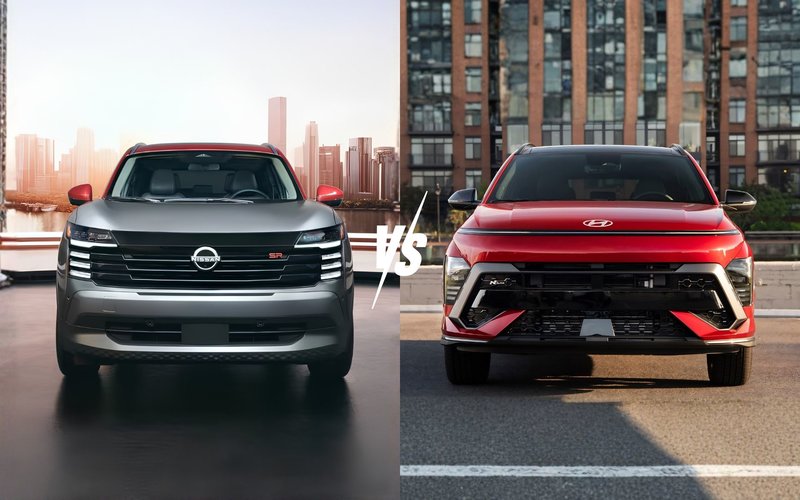
The compact SUV segment continues to grow, giving drivers more choices than ever before. If you're looking for a stylish, practical, and technology-packed crossover, two models likely on your shortlist are the 2026 Nissan Kicks and 2026 Hyundai Kona. Both offer modern styling, impressive safety features, and everyday versatility, but they cater to different driving preferences.
Whether you're commuting through the city, planning weekend road trips, or simply searching for an efficient family-friendly vehicle, understanding the strengths of each model will help you make the right decision.
Build & Price your own 2026 Nissan Kicks
Finding the Best Fit for Your Lifestyle

Both crossovers are designed to make everyday driving easier while delivering excellent value. They offer comfortable interiors, advanced driver-assistance technologies, and plenty of cargo space for busy lifestyles.
However, their personalities differ. One prioritizes fuel efficiency, affordability, and practicality, while the other offers stronger performance, available all-wheel drive, and a more premium driving experience. Your ideal choice depends on what matters most behind the wheel.
Performance That Matches Your Drive
The powertrain options highlight one of the key differences between the two compact SUVs. The 2026 Nissan Kicks is equipped with a 2.0-litre four-cylinder engine paired with Nissan’s Xtronic CVT, producing 141 horsepower and 140 lb-ft of torque. It is available with Front-Wheel Drive (FWD) or an available Intelligent All-Wheel Drive (AWD) system for added confidence in changing road conditions.
The 2026 Hyundai Kona offers a standard 2.0-litre four-cylinder engine with an Intelligent Variable Transmission (IVT), delivering 147 horsepower and 132 lb-ft of torque. For drivers looking for more power, an available 1.6-litre turbocharged engine produces 190 horsepower and 195 lb-ft of torque, paired with an 8-speed automatic transmission. AWD is available on select trims.
When it comes to fuel efficiency, both models provide competitive numbers. The 2026 Nissan Kicks achieves approximately 8.5 L/100 km in the city, 6.9 L/100 km on the highway, and 7.8 L/100 km combined according to NRCan ratings. The 2026 Hyundai Kona’s standard engine returns around 9.0 L/100 km in the city, 8.1 L/100 km on the highway, and 8.6 L/100 km combined. The turbocharged Kona delivers stronger acceleration but uses slightly more fuel compared to the standard engine.
A Comfortable Cabin with Smart Technology

Inside, both SUVs comfortably accommodate five passengers and feature thoughtfully designed cabins that balance practicality with modern convenience.
The Nissan emphasizes comfort with available Zero Gravity front seats, premium upholstery, automatic climate control, heated front seats, a heated steering wheel, and generous rear passenger space. A 12.3-inch infotainment touchscreen and an available 12.3-inch digital instrument cluster create a modern dashboard, while wireless Apple CarPlay® and Android Auto™ keep drivers connected on every journey.
The Hyundai also delivers an upscale interior with available leather seating surfaces, dual 12.3-inch displays, wireless smartphone charging, ambient lighting, heated and ventilated front seats, and an available Bose premium audio system. Its clean dashboard design gives the cabin a sophisticated feel that rivals more expensive vehicles.
When it comes to cargo versatility, the Nissan offers approximately 677 litres behind the rear seats and over 1,419 litres with the seats folded. The Hyundai provides roughly 723 litres of cargo space behind the second row and up to 1,803 litres with the rear seats folded flat, making both practical choices for groceries, luggage, or outdoor equipment.
Modern Styling That Stands Out
Both models have embraced bold, contemporary styling.
The Nissan features a redesigned front fascia, sleek LED lighting, muscular body lines, and available 17-inch or 19-inch alloy wheels, giving it a confident yet approachable appearance. Its higher ride height and rugged accents add to its urban crossover appeal.
The Hyundai takes a more futuristic approach with its signature Seamless Horizon lighting, sharp body creases, aerodynamic profile, and available 17-inch, 18-inch, or 19-inch wheels. The sporty N Line trim adds unique exterior styling elements for drivers seeking a more aggressive look.
Ground clearance also supports everyday versatility. The Nissan offers approximately 213 mm, while the Hyundai provides around 210 mm, allowing both vehicles to confidently handle rough roads and winter conditions.
Confidence Comes Standard
Today's drivers expect advanced safety technologies, and both crossovers deliver a comprehensive suite of driver-assistance systems.
Available features include:
- Automatic Emergency Braking with Pedestrian Detection
- Blind Spot Warning
- Rear Cross Traffic Alert
- Lane Departure Warning
- Lane Keep Assist
- Intelligent Cruise Control
- Driver Attention Alert
- Traffic Sign Recognition
- High Beam Assist
- Rear Automatic Braking
- Available 360-degree camera system
These intelligent systems help reduce driver stress and improve confidence whether you're navigating busy city streets or open highways.
Everyday Practicality You'll Appreciate
Beyond comfort and technology, both compact SUVs are built to handle daily life with ease.
Each model offers a 47-litre fuel tank, providing excellent driving range between fill-ups. Neither vehicle is designed for heavy towing, although the Hyundai can tow up to 2,000 pounds when equipped with the turbocharged engine. The Nissan is not rated for towing in most Canadian configurations.
Available trim levels provide plenty of choices. The Nissan lineup typically includes S, SV, SR, and SR Premium, while Hyundai offers Essential, Preferred, N Line, N Line Ultimate, and Ultimate trims, allowing buyers to choose the right combination of features and value.
Comparison Table
|
Feature |
2026 Nissan Kicks |
2026 Hyundai Kona |
|
Engine |
2.0-litre Inline-four cylinder |
2.0-litre Inline-four / 1.6-litre Turbo Inline four |
|
Transmission |
Xtronic CVT |
IVT / 8-Speed Automatic |
|
Horsepower |
141 hp |
147 hp / 190 hp |
|
Torque |
140 lb-ft |
132 lb-ft / 195 lb-ft |
|
Drivetrain |
FWD or AWD |
FWD or AWD |
|
Fuel Economy (Combined) |
7.7 L/100 km |
7.5 L/100 km (2.0L) |
|
Seating Capacity |
5 |
5 |
|
Cargo Space (Behind Rear Seats) |
850 litres |
723 litres |
|
Maximum Cargo Space |
1,400+ litres |
1,803 litres |
|
Fuel Tank Capacity |
47 litres |
47 -litres |
|
Towing Capacity |
Not Rated |
Up to 2,000 lbs |
|
Wheel Sizes |
17–19 in. |
17–19 in. |
|
Ground Clearance |
213 mm |
210 mm |
|
Infotainment Screen |
12.3 in. |
12.3 in. |
|
Digital Instrument Cluster |
Available 12.3 in. |
Available 12.3 in. |
Which Compact SUV Deserves a Spot in Your Driveway?
Both models bring plenty to the table, making either a smart choice for drivers seeking comfort, technology, and efficiency.
The 2026 Nissan Kicks stands out with its spacious cabin, user-friendly technology, impressive cargo capacity, and exceptional everyday practicality. Meanwhile, the Hyundai appeals to drivers looking for stronger available performance, premium features, and a sportier driving experience.
If you'd like to explore the 2026 Nissan Kicks in person, visit Regina Nissan to browse the latest inventory, schedule a test drive, learn about current offers, and discuss financing options with a knowledgeable team ready to help you find the perfect SUV.
